

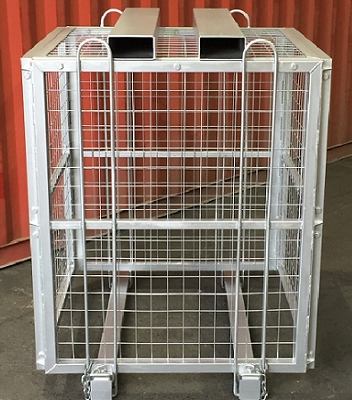

Working at height requires the right equipment. Regardless if workers are conducting inspections, performing maintenance, or moving materials; safety always comes first. A crane cage is designed to safely allow for the lifting of workers in a range of tasks that require remote elevated access and comply with Australian safety standards.
Crane cages are a useful alternative to other types of handling materials in several environments, contributing towards making workplaces safe and efficiency. So, here are 5 sectors they are often used in.
-
Construction Projects
Crane cages are most often found on construction sites. Workers frequently require safe access to roof tops which are either high or in an area where it is not possible to easily manoeuvre ladders or scaffolding.
Typical applications include:
- Structural inspections
- Steel installation
- Building maintenance
- Facade repairs
- Site inspections
By utilizing a tested crane cage, workers can access hard-to-reach areas while still remaining inside an enclosed platform. When properly operated, it improves safety and productivity.
Production companies also have professional lifting equipment, for example, a brick cage, which transfers packages of bricks and masonry materials efficiently in the area.
-
Mining and Resource Operations
Mining environments present unique challenges. The equipment is large, the work areas are very spread over wide sites, and maintenance is often done at height.
Workers may need access to:
- Processing plants
- Conveyor systems
- Crushing equipment
- Elevated platforms
- Storage facilities
An appropriately designed crane cage can assist maintenance teams to inspect and repair equipment while minimising excessive risk during lifting operations.
As mining sites have stringent safety protocols, all lifting equipment must comply to the relevant Australian standards and be regularly checked.
-
Manufacturing Facilities
These large facilities contain rows of massive production machinery, storage systems and overhead equipment that must be serviced through the years.
Or crane cage, where maintenance staff can utilize it for planned inspection at safe lift methods instead of dismantling equipment or installing temporary access systems.
This not only makes it possible for technicians’ safe access in difficult-to-reach areas but also reduces downtime overall.
Some manufacturers also use more specialised equipment, such as a brick cage, for the transport of heavy materials like bricks or blocks when increasing production at their plants or upgrading facilities.
-
Warehousing and Distribution Centres
Modern warehouses are also getting loftier with their warehouses, as businesses try to wring more storage space out of every square foot. Some examples are high-racking systems, overhead lighting, ventilation equipment, and sprinkler systems; they require periodic maintenance.
Large industrial facilities use a crane cage system to support maintenance teams while they service elevated infrastructure.
Common warehouse tasks include:
- Lighting replacement
- Roof inspections
- Ventilation maintenance
- Structural assessments
- Equipment installation
This will help to reduce manual handling risks associated with working at heights and the use of purpose-built access equipment helps improve worker confidence.
-
Infrastructure and Civil Engineering
Civil engineering projects often include bridges, tunnels, ports, dams, and other large infrastructure projects. Many of these environments require workers to provide access to hard-to-reach structures above ground level with traditional equipment.
It supports safe work practices as it provides controlled access to be able to carry out inspection, maintenance, and repair works.
This specialised construction material may also include a brick cage mechanism for safely transporting bricks, blocks, and other heavy supplies to and from the ground level and elevated work areas.
Planning and aligning the right lifting accessories allows proper usage of resources to various complex infrastructure projects.
Final Thoughts
Safe elevated access is a major requirement in almost every industry, including construction and mining, warehousing and civil engineering. If personnel must be hoisted to work areas through an approved lifting method, a well-designed crane cage provides an ideal solution for controlled access.
In addition to deploying their own specialised equipment like a brick cage for shipping ample construction material between high-rises, crane cages reduce risk while increasing productivity that supports the overall efficiency of site operations. Investing in the right lifting equipment not just keeps productivity levels high, but helps in making the work environment safer for everyone.