

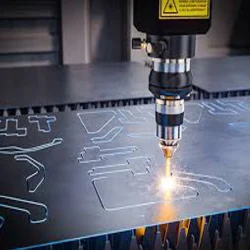

Modern machine shops rely on more than sharp tools and expensive equipment. Behind every detailed part is software that calculates cutting paths, controls movement, and helps prevent production mistakes before the machine even starts. Advanced CAM software has become a major reason why top CNC companies near me can produce accurate parts faster and with fewer costly setbacks.
CAM Software Turns CAD Designs Into Machine Instructions
A CAD file may show the shape of a finished part, but the machine cannot understand a drawing by itself. CAM software converts that design into toolpaths, spindle speeds, feed rates, and machine instructions the equipment can follow. Without this step, CNC machining would depend heavily on manual programming, which takes more time and increases the chance of error. Skilled programmers use CAM systems to define how each tool approaches the material, how deep each cut should be, and how the machine transitions between operations. This process helps transform a digital model into a physical part with repeatable accuracy.
Better Toolpaths Help Reduce Material Waste
Poor tool movement wastes material quickly. Sharp directional changes, unnecessary passes, or inefficient cutting patterns can remove too much stock or damage expensive raw material. Advanced CAM software helps avoid those problems by calculating smoother and more efficient paths across the workpiece. Cleaner motion improves chip removal while reducing stress placed on the tool and the material. A CNC machine company focused on production efficiency often depends on these software features to lower scrap rates and improve consistency across large production runs.
Simulation Features Catch Errors Before Machining Starts
One programming mistake can damage a tool, destroy a workpiece, or crash the machine itself. CAM software helps reduce those risks through digital simulation. Before cutting begins, programmers can watch a virtual version of the machining process to check for collisions, incorrect tool lengths, or bad movement sequences. This allows adjustments to happen before real material enters the machine. Companies searching for CNC companies near me often pay attention to quality control practices, and simulation software has become one of the strongest tools for preventing avoidable production errors.
Advanced CAM Software Supports Complex 5 Axis Machining
Five axis machining involves simultaneous movement across multiple directions, which creates far more complicated toolpaths than standard three-axis work. Manual programming for those operations would take enormous time and increase the possibility of mistakes. Advanced CAM platforms simplify this process by calculating tool orientation, cutting angles, and smooth transitions automatically. Aerospace parts, turbine components, and medical devices often require this level of programming detail because their shapes contain curves and surfaces that standard machining struggles to produce efficiently. Better software support allows CNC machining shops to handle these advanced geometries more confidently.
Smarter Cutting Strategies Extend Tool Life
Cutting tools wear down from heat, pressure, and vibration during machining. Poor programming can shorten tool life dramatically by forcing aggressive movements or uneven cuts. Modern CAM software includes strategies designed to maintain more consistent tool engagement with the material. Trochoidal milling, adaptive clearing, and smoother entry paths help distribute cutting pressure more evenly across the tool edge. This can reduce sudden heat spikes and limit unnecessary wear. A CNC machine company that manages tool life effectively often lowers production costs while maintaining stronger surface quality on finished parts.
Faster Programming Improves Production Turnaround
Customers rarely want long lead times for precision parts. CAM software helps shorten programming time by automating repetitive calculations and storing machining templates for future jobs. Instead of building every program from scratch, programmers can reuse proven cutting strategies for similar materials or part types. Faster programming allows CNC machining operations to move jobs into production more efficiently without sacrificing accuracy. This matters for industries that rely on tight schedules, including automotive manufacturing, industrial repair, and aerospace support work.
Software Integration Helps Machines Work More Efficiently
Modern CAM systems often connect directly with machine controls, tooling libraries, and inspection systems. This integration improves communication between programming and production by reducing manual data entry. Tool lengths, offsets, spindle limits, and machine capabilities can all be managed inside one connected environment. Better coordination helps reduce setup mistakes and improves consistency between different operators or machines. Shops comparing CNC companies near me frequently value this type of organized workflow because smoother production usually leads to fewer delays and more dependable part quality.
Skilled Programmers Still Matter Behind the Software
Advanced software does not replace machining knowledge. Experienced programmers still decide cutting order, fixture design, material strategy, and inspection requirements. CAM systems provide powerful tools, but human judgment determines how effectively those tools are used. Material hardness, part geometry, tolerance demands, and machine limitations all influence programming decisions. Strong CNC machining operations combine software capability with real manufacturing experience instead of relying entirely on automation to solve production challenges.
Amtec Solutions Group uses CAM technology to support precision machining. Accurate machining depends on more than machine horsepower alone. Toolpath planning, simulation, cutting strategy, and programming efficiency all affect the final result long before the cutter touches the material. Businesses searching for CNC companies near me often look for more than equipment alone. Amtec Solutions Group supports CNC machining projects with advanced programming methods, modern CAM-driven production workflows, and machining strategies built around repeatable precision for complex industrial parts.