

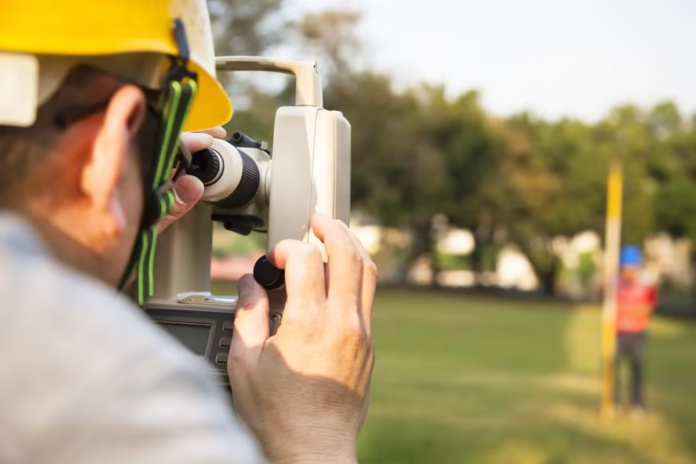

Fence projects often seem straightforward until property boundaries become part of the conversation. A few feet in the wrong direction can create disagreements, legal concerns, or expensive corrections after installation is already complete. Accurate surveying helps homeowners place fences with more confidence while avoiding future boundary disputes.
Why Existing Fence Lines Are Not Always Reliable
Older fences do not automatically represent the true property boundary. Previous owners may have installed fencing based on assumptions, verbal agreements, or outdated measurements taken years earlier. Over time, replacement sections and landscaping changes can shift fence alignment even further away from the actual line.
Experienced professionals offering property line survey services often discover existing fences sitting several inches or even feet off the legal boundary. Homeowners searching for a property surveyor near me sometimes assume their current fence proves ownership limits, yet legal property descriptions usually determine the true boundary instead of visible structures.
Modern Survey Equipment Delivers Far Greater Precision
Today’s surveying methods use advanced GPS technology, digital mapping tools, and detailed legal records to establish highly accurate boundary positions. Modern instruments allow surveyors to measure land with precision that was much harder to achieve decades ago using older manual techniques.
A licensed land surveyor near me may combine current field measurements with historical plats, deed descriptions, and recorded markers to confirm exact property limits. Accurate measurements help ensure new fence installations align properly with legal boundaries rather than relying on visual estimates or neighboring assumptions.
Property Corners Sometimes Disappear Over Time
Boundary markers are not always easy to find years after original development occurred. Landscaping projects, erosion, construction activity, and soil movement can bury or damage property corner markers that once clearly identified lot boundaries.
Professional surveyors near me often spend significant time locating original reference points before finalizing a property line survey. Recovering accurate boundary markers helps establish more dependable fence placement while reducing uncertainty between neighboring properties. Proper verification becomes especially important in older neighborhoods where original markers may no longer remain visible.
Sloped Yards Can Make Fence Placement More Complicated
Uneven terrain creates additional challenges during fence installation because slopes can distort visual assumptions about property boundaries. A fence that appears straight from one angle may actually drift across the legal line as elevation changes across the property.
Survey companies near me frequently evaluate topography carefully before staking fence locations on sloped lots. Elevation changes, retaining walls, drainage patterns, and grading adjustments can all influence how fencing should be positioned. Accurate surveying helps contractors maintain proper alignment even across difficult terrain.
Neighboring Structures May Already Cross Boundary Lines
Sheds, driveways, landscaping features, and older retaining walls sometimes extend beyond legal property boundaries without homeowners realizing it. Fence installation may uncover these issues for the first time once accurate measurements are completed.
Many homeowners contacting a land surveyor discover minor encroachments during the surveying process before new construction begins. Identifying these problems early helps avoid conflicts later while giving property owners time to address concerns before permanent fencing is installed near disputed areas.
Why Verbal Agreements Rarely Replace Official Surveys
Neighbors may agree informally about where they believe the boundary exists, but verbal understandings do not necessarily match recorded legal descriptions. Friendly assumptions can become complicated years later if property ownership changes or disputes arise after fence installation.
A professional property line survey provides written documentation based on legal records and field measurements rather than personal opinions. Homeowners searching for surveyors near me often request surveys specifically to avoid future disagreements that may arise after neighboring properties are sold or inherited.
Local Regulations May Require Verified Property Boundaries
Many municipalities and homeowner associations have setback rules affecting fence placement near property lines. Installing fencing too close to easements, utility corridors, or neighboring lots may create compliance issues even if the mistake was unintentional.
Survey companies near me often help homeowners identify boundary setbacks and easement restrictions before construction begins. Accurate surveying supports smoother permit approval while reducing the risk of fence relocation later due to local code violations or utility conflicts.
Accurate Surveys Can Prevent Expensive Fence Relocation Later
Moving an incorrectly placed fence after installation can become far more expensive than obtaining a survey beforehand. Labor costs, material replacement, landscaping damage, and neighbor disputes may all add significant expenses once construction is already complete.
Homeowners looking for a property surveyor near me often view surveying as a preventative step that protects both the investment and long-term property rights. The Land Consultants provides property line survey services that help homeowners establish accurate boundaries for fence installation, land improvements, and future property planning with greater clarity and confidence