

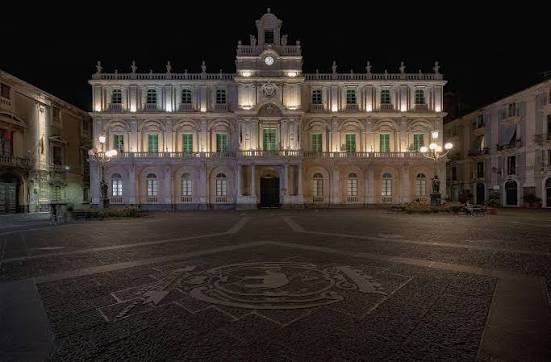

A Medical Education Tradition That Spans Centuries
The University of Bologna, founded in 1088, is widely considered the world’s oldest university, and Italy’s relationship with formal medical education is nearly as old. The University of Padua produced anatomists whose discoveries reshaped the entire discipline — Andreas Vesalius worked there, Harvey studied the circulation of blood with knowledge first advanced at Padua’s anatomy theatre, Galileo himself taught natural philosophy at the same institution. Italy’s medical education heritage is not merely historical — it has produced a tradition of rigorous scientific and clinical medicine that continues to shape Italian medical universities today.
For international students considering where to study medicine, the reputation of a country’s medical education system matters not just as an abstract credential but as a practical signal of what the training environment looks like. Italian medicine is scientific, evidence-based, and delivered in institutions that take the weight of their educational tradition seriously. The degree produced by Italian medical universities is recognised across the European Union, by WHO, and through the relevant licensing pathways in countries including India, the UK, and the United States.
English-Medium Programmes and the International MD
The development of English-language medical programmes in Italy has been one of the most significant recent changes for international students considering MBBS in Italy. Several major Italian universities now offer their six-year medical programme entirely in English — including the University of Milan, the University of Pavia, the Catholic University of the Sacred Heart, and the University of Turin, among others. These programmes attract students from across Europe, South Asia, Africa, the Middle East, and the Americas.
The English-medium Italian medical degree (called the “Laurea Magistrale in Medicina e Chirurgia” in Italian) is equivalent to the MBBS degree and carries the same EU recognition, WHO listing, and international credential portability. Students who complete this six-year programme are eligible to take the Italian medical licensing examination and, subject to specific country requirements, to practise medicine in any EU country, to sit for FMGE in India, and to pursue licensing pathways in the UK, USA, Australia, and other major medical employment markets.
Quality of Italian University Hospitals
Italian university hospitals — the clinical training environments where Italian MBBS students complete their clinical rotations — are genuinely high-quality environments. Major Italian teaching hospitals, particularly in Milan, Rome, Turin, Bologna, and Padua, combine strong clinical standards with active research programmes that create a learning environment where clinical medicine and medical science are practised and taught simultaneously. The patient volume and case diversity in these hospitals gives students exposure to a full range of clinical presentations across medicine, surgery, obstetrics, paediatrics, and the major specialties.
For students who want to combine medical education with genuine research exposure — either because they have research ambitions or because they want the intellectual depth that research-oriented clinical environments provide — Italian university hospitals offer opportunities that extend beyond the formal curriculum. Research projects, case publications, and connections with specialist faculty in research-active departments are accessible to engaged students at Italian institutions in ways that less research-intensive environments cannot match.
The Admission Process and What It Requires
Admission to English-medium Italian medical programmes involves a specific entrance examination process. Italy administers a centralised test — the International Medical Admissions Test (IMAT) — for admission to English-medium medical programmes at state universities. The IMAT is a standardised examination covering biology, chemistry, physics, mathematics, and logical reasoning, conducted in English, and used by Italian state universities to rank international applicants for available seats.
For Indian students, meeting NMC’s requirement of a qualifying NEET score is also necessary alongside IMAT. The combination of IMAT preparation and NEET preparation represents a significant academic commitment, and students considering MBBS in Italy should allow adequate preparation time for both. Students who perform well in IMAT gain access to state university programmes with lower fee structures; students who prefer private Italian universities have alternative admission pathways that typically involve university-specific entrance tests or direct evaluation of secondary school performance.
The Cost Picture for Italian Medical Education
The cost of MBBS in Italy depends significantly on whether a student attends a state university or a private institution. State university tuition fees in Italy are income-linked and subsidised, meaning that international students who qualify through the IMAT can attend Italian state medical schools at surprisingly affordable fee levels — often significantly lower than Indian private medical college fees for comparable quality education. Private Italian medical universities charge higher fees but offer different admission pathways and often have more international student support infrastructure.
Living costs in Italy vary considerably by city. Milan and Rome are among Italy’s more expensive cities; universities in smaller cities like Pavia, Ferrara, or Catania offer significantly lower living costs while still providing access to excellent medical training. Students who are strategic about city choice — selecting universities in more affordable cities rather than defaulting to the best-known ones — can substantially reduce the total cost of MBBS in Italy while accessing programmes of comparable or equal academic quality.
After Graduation: What Italian Medical Degrees Open
The career pathways available to graduates of Italian medical programmes are one of the strongest arguments for the investment. Within Italy and the EU, the automatic recognition of Italian medical qualifications under European law provides immediate access to the European medical labour market — which includes some of the most attractive healthcare employment conditions in the world. For Indian students who wish to return home, the FMGE pathway is available from WHO-listed Italian universities. For students with UK or US ambitions, the PLAB and USMLE pathways are accessible from an Italian medical foundation.
Italian medicine’s research reputation also provides specific advantages for students pursuing postgraduate specialty training. Competitive specialties in cardiology, oncology, neurology, and transplant medicine have active research centres at Italian teaching hospitals, and students who developed research connections during their undergraduate training have genuine advantages in entering these programmes. The Italian medical degree is, in short, a genuinely flexible foundation for a wide range of medical career pathways.