

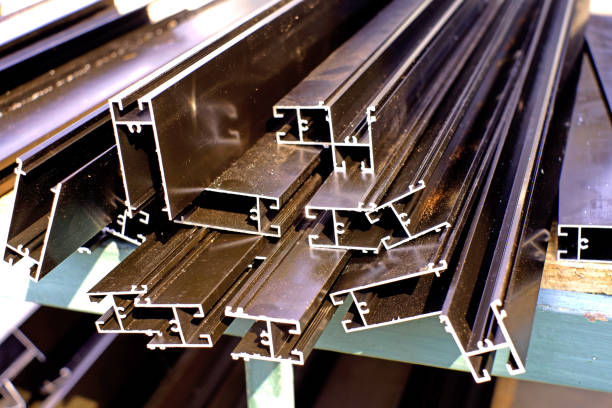

Modular design works best when a structure can change without forcing the entire project back to the drawing board. That is one reason T slot framing appears in machine frames, workstations, enclosures, and automation cells. The system separates the frame into reusable parts, so builders can adjust one area without disturbing everything around it.
Why Modular Design Starts With Standardized Profiles
A modular frame depends on parts that follow a consistent geometry. With MiniTec extruded aluminum framing, profiles share slot patterns that allow brackets, fasteners, panels, and accessories to attach at repeatable points. That consistency gives designers a common building language. One section can support a work surface while another carries guarding or a sensor bracket, yet both use the same framing logic.
Standardization also makes later changes easier. A machine builder can extend a base, add a vertical post, or move a cross member without creating a custom welded joint for each revision. The aluminum framing material remains useful because the slots provide mounting positions along the profile instead of at one permanently drilled location.
Connections Should Be Strong Without Becoming Permanent
Modular design does not mean loose or temporary construction. The joints still need to handle the loads, vibration, and movement expected in service. Mechanical fasteners let a builder lock profiles together securely while keeping the option to disassemble the frame later.
That difference becomes useful during commissioning. Equipment rarely lands in exactly the position shown in an early layout. A bracket may need to shift, a panel opening may need more clearance, or a support rail may need to move after wiring is installed. An extruded aluminum T slot structure makes those adjustments possible without cutting welds or grinding apart finished joints.
Designing Around Reuse Instead of One-Time Fabrication
A core principle of modular design is that parts should remain useful after the first configuration changes. T slot extrusion supports that approach because profiles, connectors, feet, handles, and other hardware can often be removed and used again if they remain in good condition. That matters in plants where equipment layouts change as products or processes evolve.
Reuse also changes how engineers think about a frame at the start of a project. Instead of treating the structure as one finished object, they can think in sections. A base may stay in place while an upper guard changes. A workstation may gain another shelf. A conveyor support may be shortened and moved. The value is not simply that the frame comes apart. Useful sections can keep working in a new layout.
Accessories Are Part of the Modular System
Profiles alone do not make a structure truly modular. The accessory system matters just as much. MiniTec Aluminum Framing can accept components such as hinges, handles, latches, panel hardware, casters, leveling feet, cable clips, and support brackets. Each accessory adds a function without forcing a permanent change to the main rail.
That becomes especially clear on equipment enclosures and workstations. A solid panel may later be replaced with a clear guard. A fixed bench may need casters. A monitor arm may shift to the opposite side of an operator station. With a T slot aluminium extrusion layout, those changes can happen at the accessory level instead of requiring a new frame.
An aluminum framing kit can also simplify planning because the profiles and matching hardware can be selected as one system. That reduces the chance of building a strong frame only to discover later that the chosen hinges, panel clips, or mounting plates do not fit the slot geometry.
Modularity Helps During Assembly and Installation
The assembly process benefits from the same principles. Because the frame is built from separate profiles and connectors, installers can work in stages. A base can be assembled first, checked for square, and adjusted before vertical sections are added. Panels, doors, and accessories can follow after the main structure is aligned.
This staged approach is useful on crowded factory floors. Large welded frames can be difficult to maneuver through doorways or around installed machinery. Modular sections can often be brought into the area separately and joined near the final location. That does not remove the need for careful engineering, but it can make installation more practical where access is limited.
Future Changes Should Be Planned Before the First Build
Good modular design leaves room for the next version of the equipment. Spare slot space, accessible fasteners, and sensible profile orientation can make later additions much easier. Designers do not need to predict every future change, but they can avoid trapping connectors behind panels or blocking useful mounting faces with permanent components.
The same thinking applies to load and stiffness. A modular frame still has to meet the demands of the application. Profile size, span, bracing, connection method, and support conditions determine whether a MiniTec Aluminum Framing structure is suitable for the job. Modularity is useful only when the frame remains stable and properly supported.
For companies building machine frames, workstations, guards, or other systems around modular design principles, MiniTec Solutions is one source for compatible profiles, connectors, custom-cut components, and design assistance. That kind of coordinated supply can make it easier to keep the framing, hardware, and future modifications working as one system rather than as unrelated parts.