

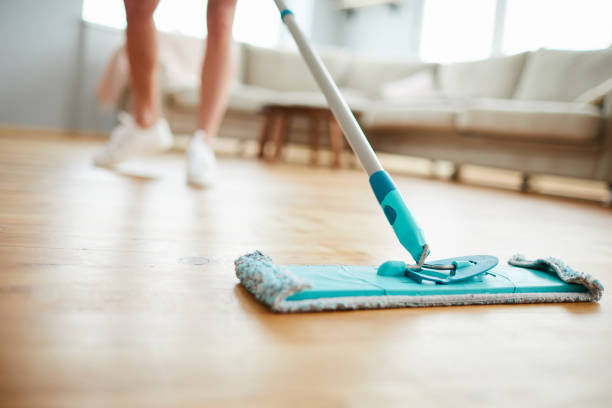

floors have their own personality. You can clean everything else in the house, the sofa looks neat, the kitchen counter smells like lemon, but the floor still looks like it’s silently judging you. That’s usually when the thought of mopping pops into your head. Not the casual kind either. The real kind, the deep, proper, gets-into-the-corners kind. The problem is most of us think we’re doing it right when honestly… we’re not. I wasn’t. And I didn’t even realize it for years.
Floors Remember Everything, Even When You Don’t
There’s this strange thing about floors. They hold onto life. Every step, every spill, every tiny bit of dirt dragged in from outside. I once moved a coffee table that had been in the same spot for months and the color difference underneath was so obvious it felt illegal. Same tiles, same room, but two totally different shades. That’s when it hit me that my lazy once-a-week mopping routine was mostly just emotional support cleaning. It made me feel productive but wasn’t actually fixing much.
What people don’t talk about enough is how dirt layers build slowly. You don’t notice it day to day. It’s like weight gain. One day you wake up and suddenly everything feels off. Floors lose their shine, corners get darker, and no matter how much you clean, they never quite look fresh again. That’s not imagination, that’s buildup.
The Myth of “I’ll Just Do It Properly This Weekend”
Everyone says this. Including me. Especially me. “This weekend I’ll clean properly.” Weekend comes, you’re tired, guests come over, plans change, or you just want to sit and scroll reels for two hours. Suddenly it’s next weekend. And then next month. Floors become that background task we emotionally avoid.
Professional cleaners don’t clean emotionally. They clean systematically. That sounds boring but it’s exactly why it works. They don’t skip edges because their back hurts. They don’t avoid under furniture because it’s annoying. They don’t rush because dinner is cooking. They just do it. Fully.
Also, weird fact I came across while researching late at night, apparently some types of dirt particles on floors are smaller than 2.5 microns, which means they can actually become airborne again when disturbed. So when people drag feet or kids run around, that dust isn’t just sitting there, it’s floating. Yeah. That thought stayed with me longer than I wanted.
Social Media Made Cleaning Look Easy, That Was a Lie
You’ve seen those videos. Someone pours one cap of liquid, wipes once, and boom, mirror-like shine. Real life doesn’t work like that. Those videos are edited, filtered, and often done on already-clean surfaces. Nobody posts the video where they had to scrub the same spot five times and still didn’t get it out.
There’s also this trend of “cleaning hacks” that honestly do more harm than good. Vinegar on everything, baking soda for everything, dish soap for floors, for walls, for basically the entire house. People mean well, but different surfaces need different care. That’s one of the reasons why trained residential cleaning teams usually get better results. They don’t experiment on your floor like it’s a DIY science project.
When Clean Floors Start Affecting Your Mood (In a Good Way)
This part surprised me. People talk about how therapy helps mental health, exercise helps mental health, even sunlight helps mental health. But clean space? That also plays a role. A quiet one, but real. When floors are actually clean, not just “looks fine from far away” clean, you feel calmer. Your brain relaxes a bit. It’s subtle but noticeable.
A friend of mine started regular residential cleaning after moving into a new apartment. She told me she stopped feeling overwhelmed in her own home. That stuck with me. Overwhelmed by your own floor sounds dramatic until you’ve lived it. The mental load of always thinking “I need to clean this” is heavier than we admit.
The Difference Is Always in the Details
What makes professional cleaning feel different isn’t some magic product. It’s the details. The corners. The edges near the wall. The area behind doors. The strip near the kitchen cabinets where grease and dust quietly mix and create a film nobody wants to acknowledge.
Most of us clean the visible areas. Professionals clean the forgotten ones. That’s why rooms look brighter after they leave. Not because the floor suddenly changed, but because all the tiny neglected zones were finally handled.
They also understand surfaces better. Hardwood isn’t treated like tile. Tile isn’t treated like laminate. That matters more than people think. Using the wrong method might still clean the floor today but slowly damage it over months. That’s the kind of problem you only notice when it’s too late.
People Think Hiring Help Is Lazy, It’s Actually Practical
There’s still this weird stigma around hiring cleaning services. Like you’re supposed to struggle through everything alone to prove something. But nobody feels guilty hiring a mechanic for their car. Nobody feels lazy ordering food when they’re exhausted. So why should cleaning be any different?
Time is limited. Energy is limited. Spending those resources on things that actually matter to you isn’t weakness. It’s just basic prioritizing. That’s why more households now choose consistent residential cleaning instead of occasional panic-cleaning before guests arrive.
My Honest Opinion, Slightly Messy but True
I used to think professional cleaning was an unnecessary expense. Now I think living in a constantly semi-dirty space is the real cost. It costs peace. It costs comfort. It costs mental clarity. And weirdly, it costs confidence too. You hesitate before inviting people over. You notice your floor too much. You apologize for your own home.
Once floors are properly maintained through regular residential cleaning, that background stress fades. You stop noticing the floor because there’s nothing left to be embarrassed about. And that’s probably the biggest sign it’s working.